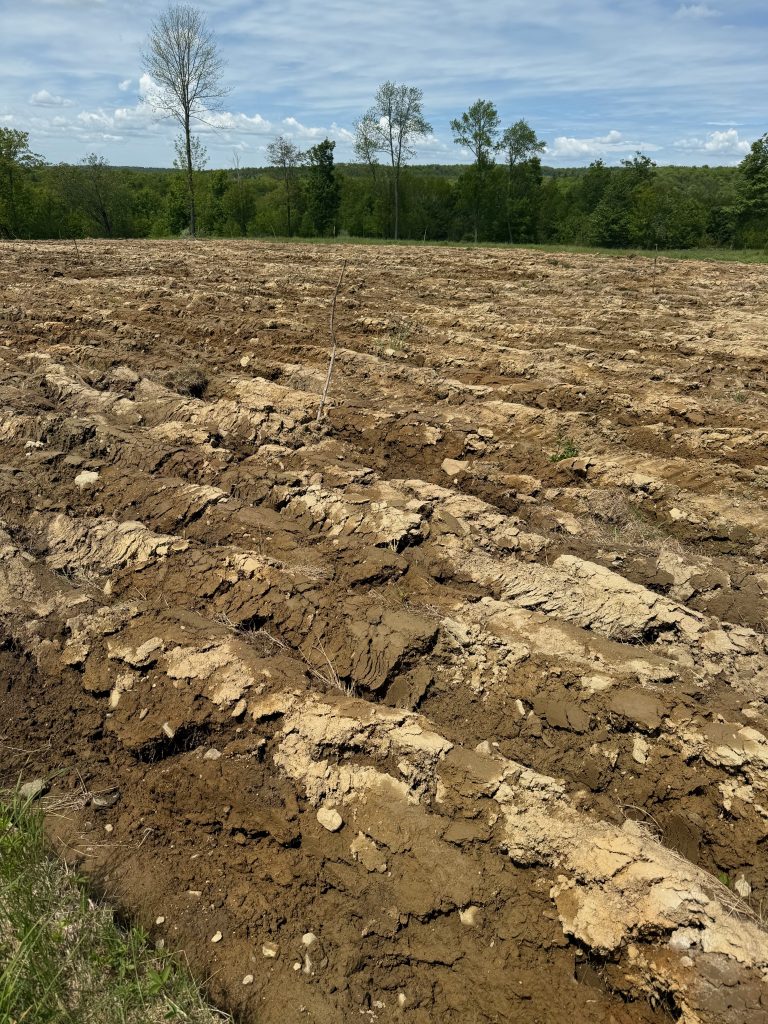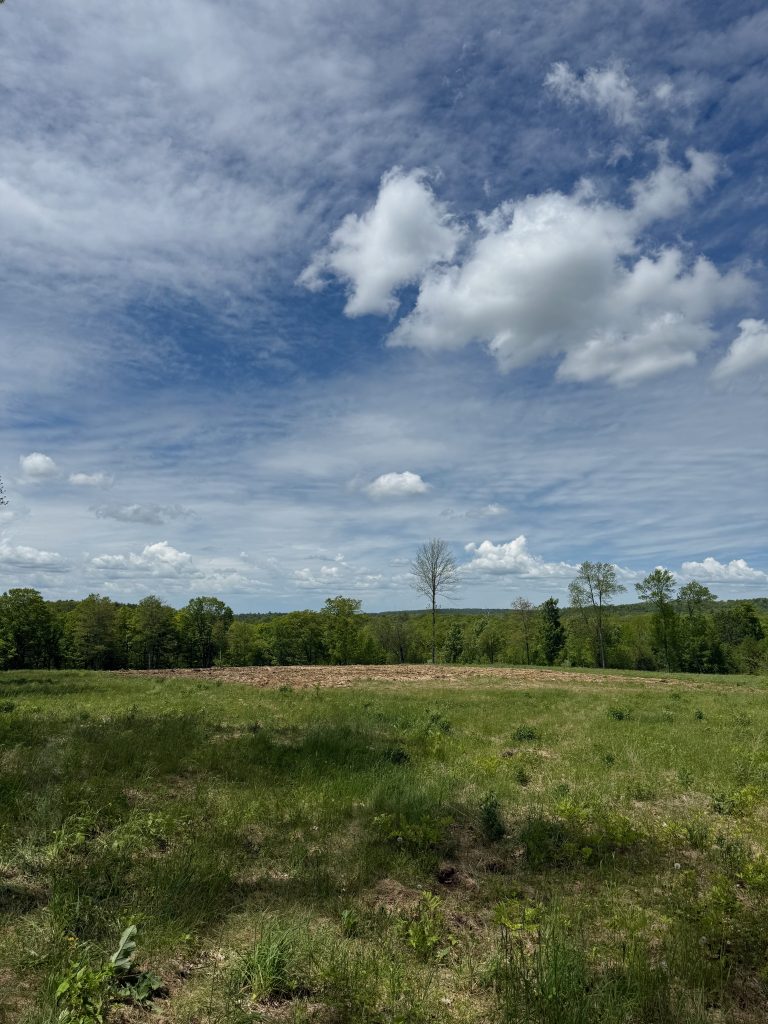
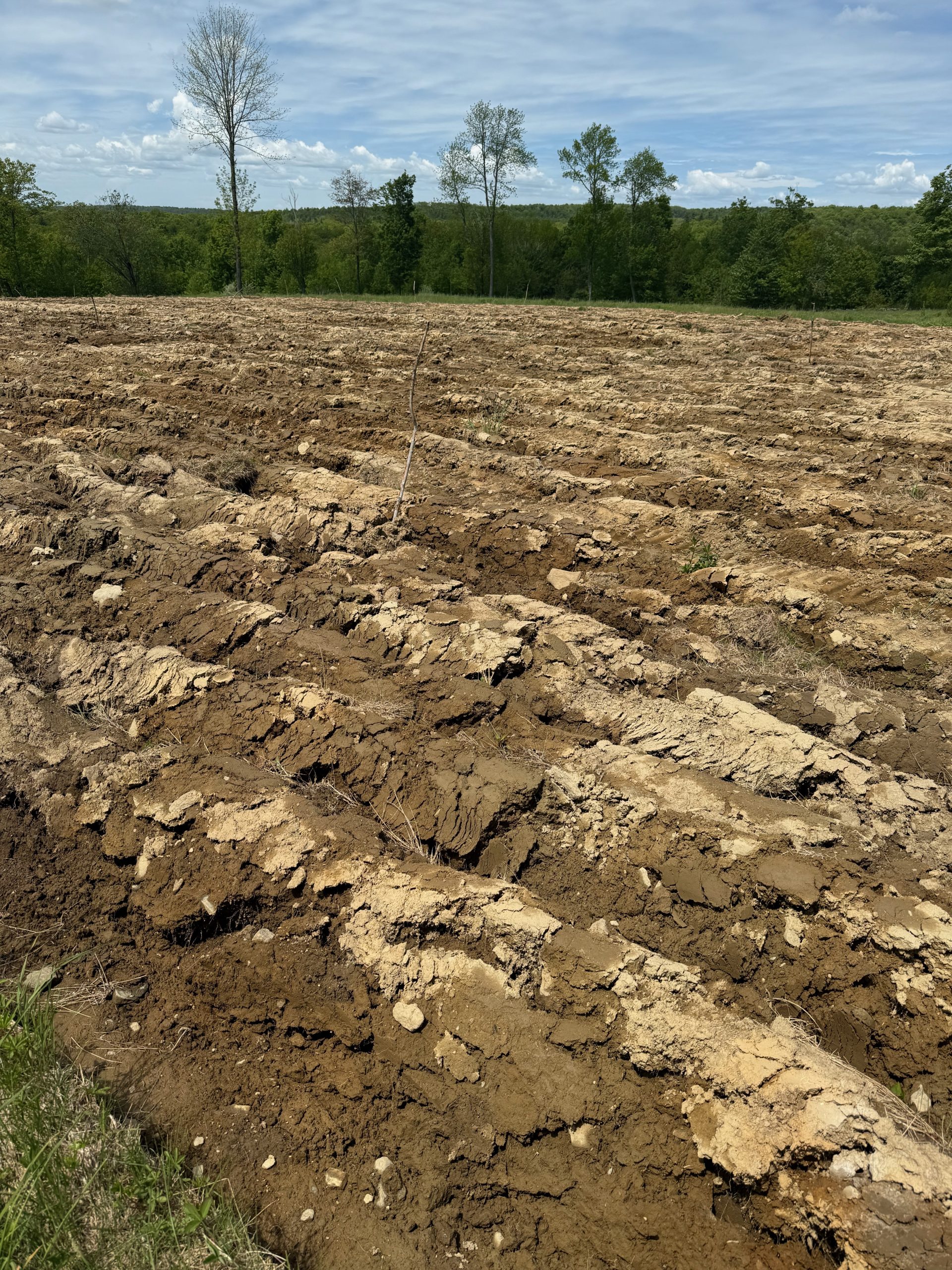
Developed about one acre of wheat field from raw pasture.
Turning raw pasture into wheat field required numerous passes of various tractors, implements, and compost injections. A keyline plow was used to make deep furrows and shake the earth from beneath the surface—it does not move lower soil to upper soil. Compost extracts were dripped into the soil at the same time the keyline plow was moving through.
Because of the drought, the cover crop planted immediately after the inoculation did not take hold. It is a three part process to transform a field: (1) Keyline plow is used to address the compaction layer, (2) running a compost tea drip at the same time, allowing the compost tea to go into the new furrows, as microbes cannot penetrate the compaction layer, (3) planting a cover crop, which allows the microbes a chance to create their home and ecosystem in the soil. The cover crop in June did not grow due to the drought, leading to weed grow-back.
Two primary challenges are insect pressure and weed pressure, which stress the desired crop. Right now, the new microbial ecosystem is only preliminarily established—we will need to repeat the process next season: the keyline plow, followed by compost drip and cover crop.
Winter wheat from Maine Grain Alliance was planted early September. Wheat is harvested mid-summer.